7 Oct 2026
Zombie UI: why AI-built interfaces need your intent
AI can ship the best UI. But if it ships the best UI for everyone, it isn't the best anymore. That's the zombie UI problem (almost everything looks the same and lifeless), and the fix starts with intent.
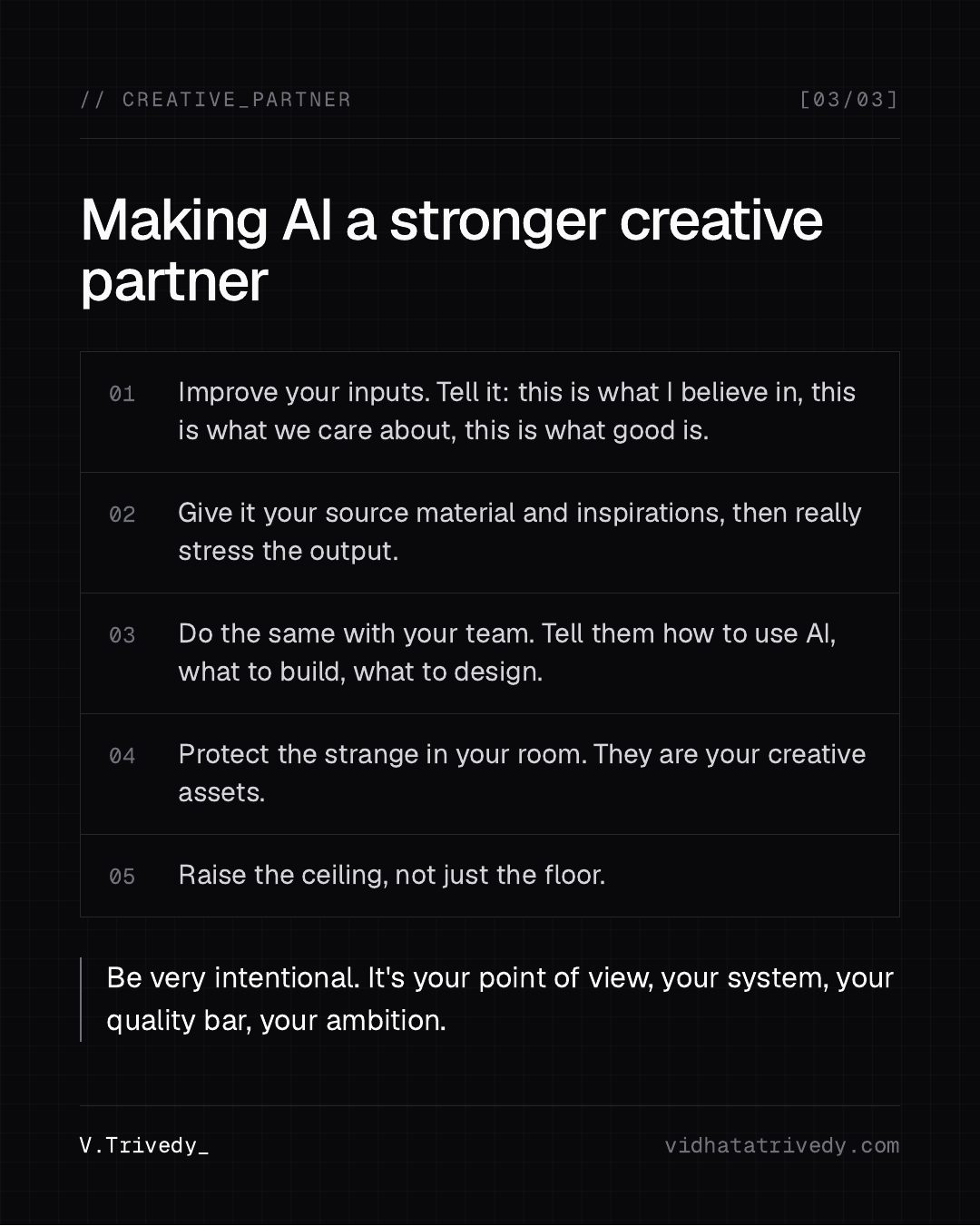
Intentionality is the most important thing in UI design right now, and copying kills it.
Your design should show that you really meant to build this product for this user. It should tell them the builder cared & understood them. It needs a personality they can connect to, because personality gives the product an identity, and with an identity the user can have a relationship with it.
AI kills both. It produces the most probable thing, it is rewarded for finishing, and we already treat AI builds as disposable, so they come out generic for all. Copying does the same.
So have a point of view as a designer: who your users are, what they do, how they behave, what they care about etc.
None of this means dropping AI. Users don't care how a UI was made, and we are expected to ship fast. Use AI to design a better solution, with your intent steering it.
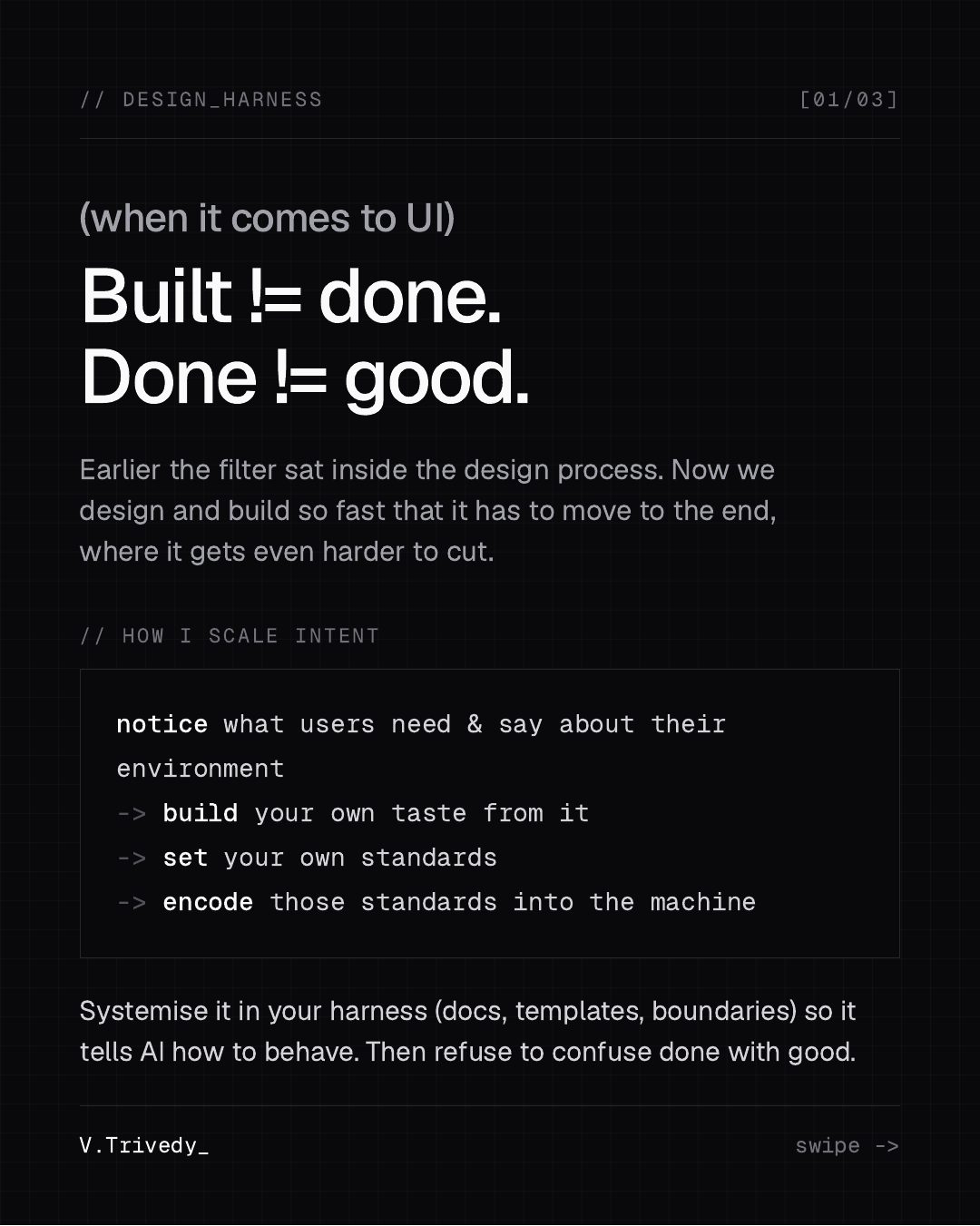
The most offensive thing about AI slop is that details don't matter in it. The devil lies in the detail. So craft meticulously: go a level or two deeper than what users see, and keep adding & tweaking details. Notice what your users need and say about their environment, build your own taste from it, turn that into standards, then encode those standards into the machine.
And design isn't just the screen anymore. The whole system has to care about the user and the details, and carry the personality.
The issue is scaling intent. Systemise it in your harness (docs, templates, boundaries) so it tells AI how to behave. Then refuse to confuse done with good. Earlier the filter sat inside the design process. Now we design and build so fast that it has to move to the end, where it gets even harder to cut.
Built is not equal to done. Done is not equal to good.
What makes art good is the unexpected detail. "I cannot believe they thought of this too." A deeper meaning behind the surface, and a continuous theme binding the whole build together. AI isn't great at these. But with AI you can run your own crafting experiments at scale, adding detail and steering it towards your intent. Earlier that was painfully slow.
The other good news: nobody knows what UI looks like in this era. Dashboards are dying anyway, and more systems are being optimised for AI agents. Best practices aren't defined yet, so we get to define them. Bring human judgment, then scale it with AI.
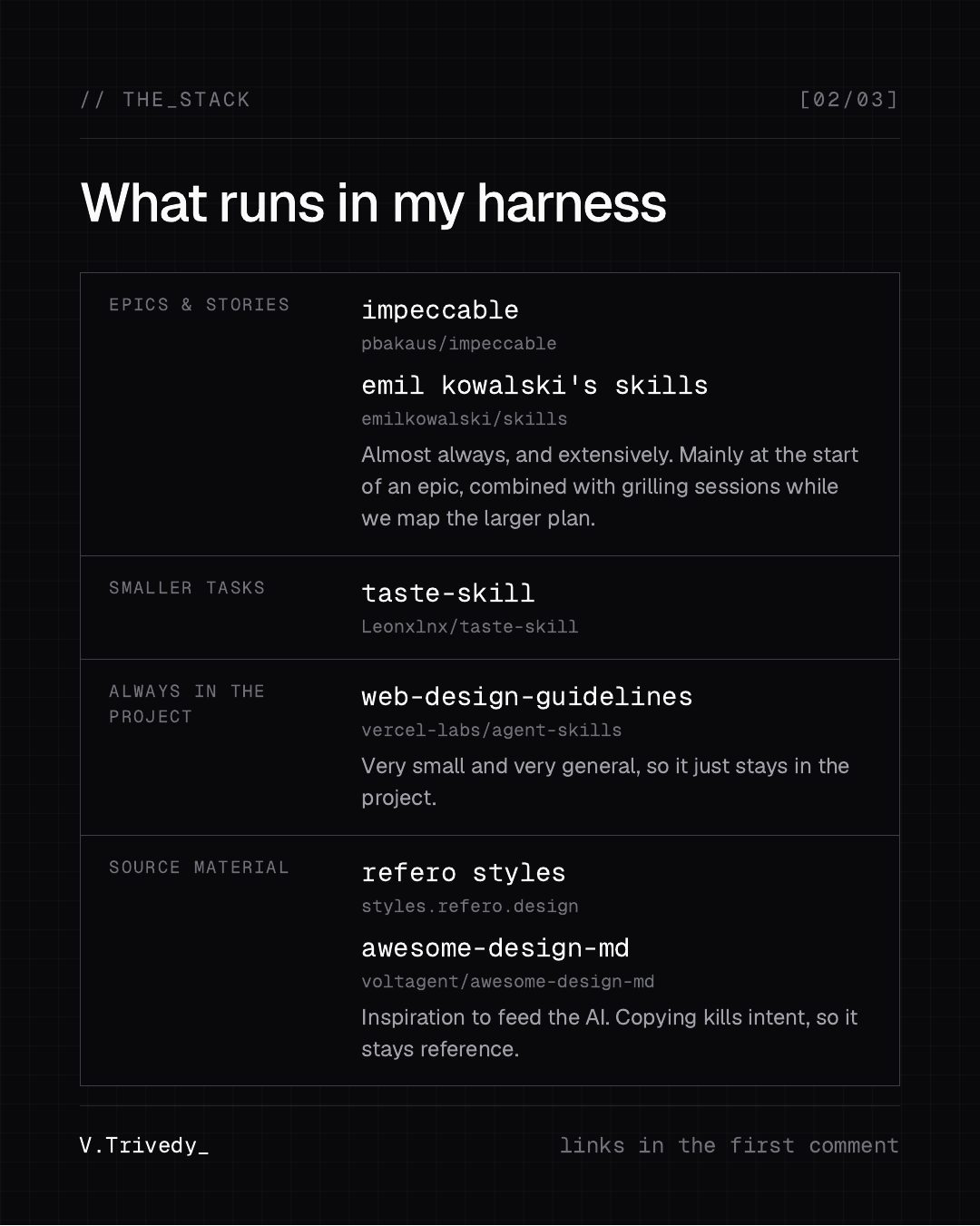
My own harness for this: impeccable & Emil Kowalski's skills at the start of every epic (alongside grilling sessions, while we map the larger plan), taste-skill for the smaller tasks, and Vercel's web-design-guidelines sitting in every project. The full stack, plus how I use AI as a creative partner, is in the PDF.
Be very, very intentional. It's your point of view, your system, your quality bar, your ambition, brought to life with AI.