20 Jul 2026
Keeping up with your agents: understanding is the bottleneck
Are you keeping up with your agents?
Most of my time these days goes into grilling sessions. Me, an agent, two or three of my team members. Usually it starts as one agent and one plan, then it sprawls: more agents, sub-plans, sometimes a quick prototype mid-session to settle a question we're stuck on. Then a decision.
What comes out of those sessions is shared understanding. The code comes after.
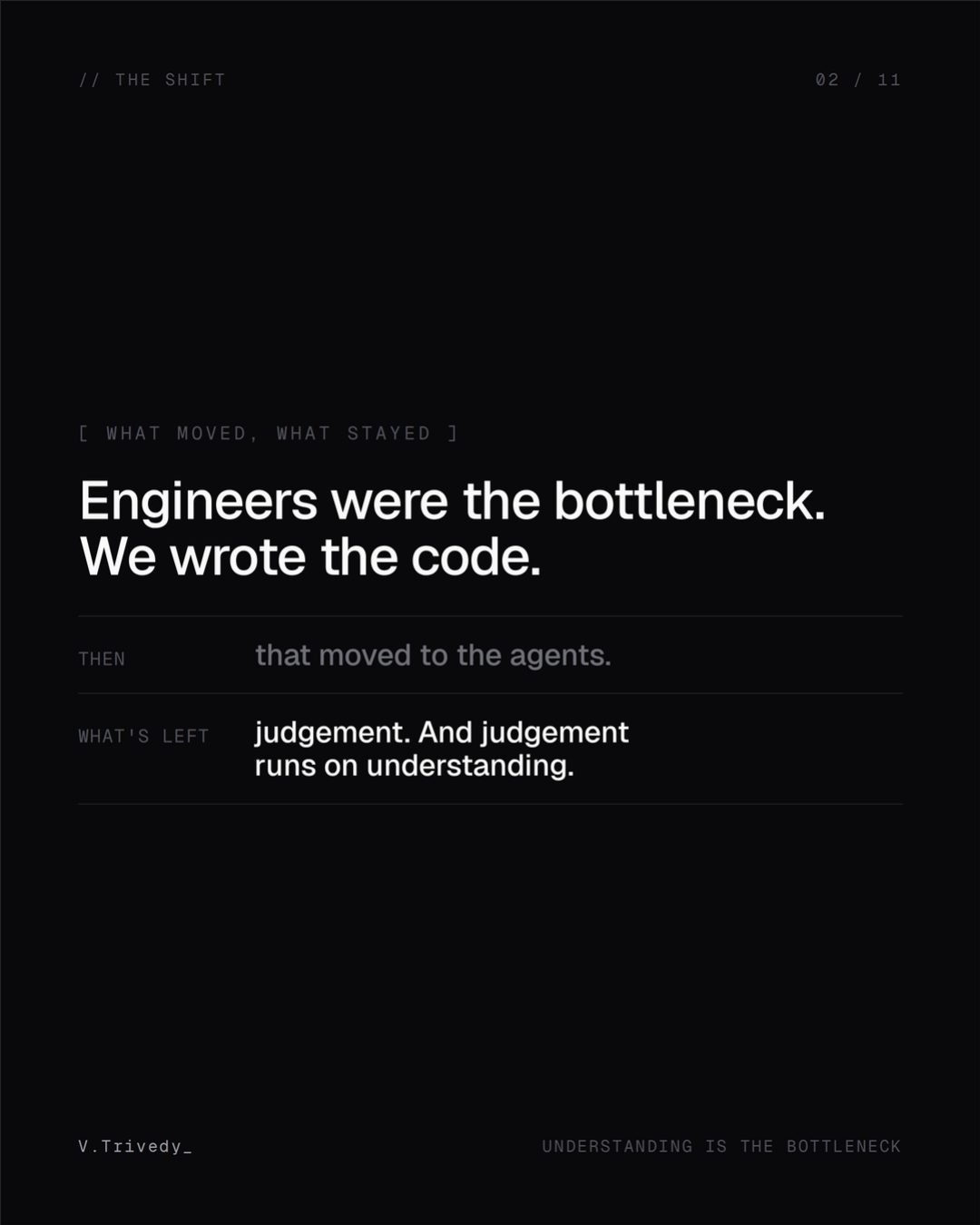
Here's why I run my time this way. The part of engineering that stays with humans now is judgement (verification, taste, the decisions, the intuition you only get from having been burned before), and judgement runs on understanding. You can't judge what you don't understand.
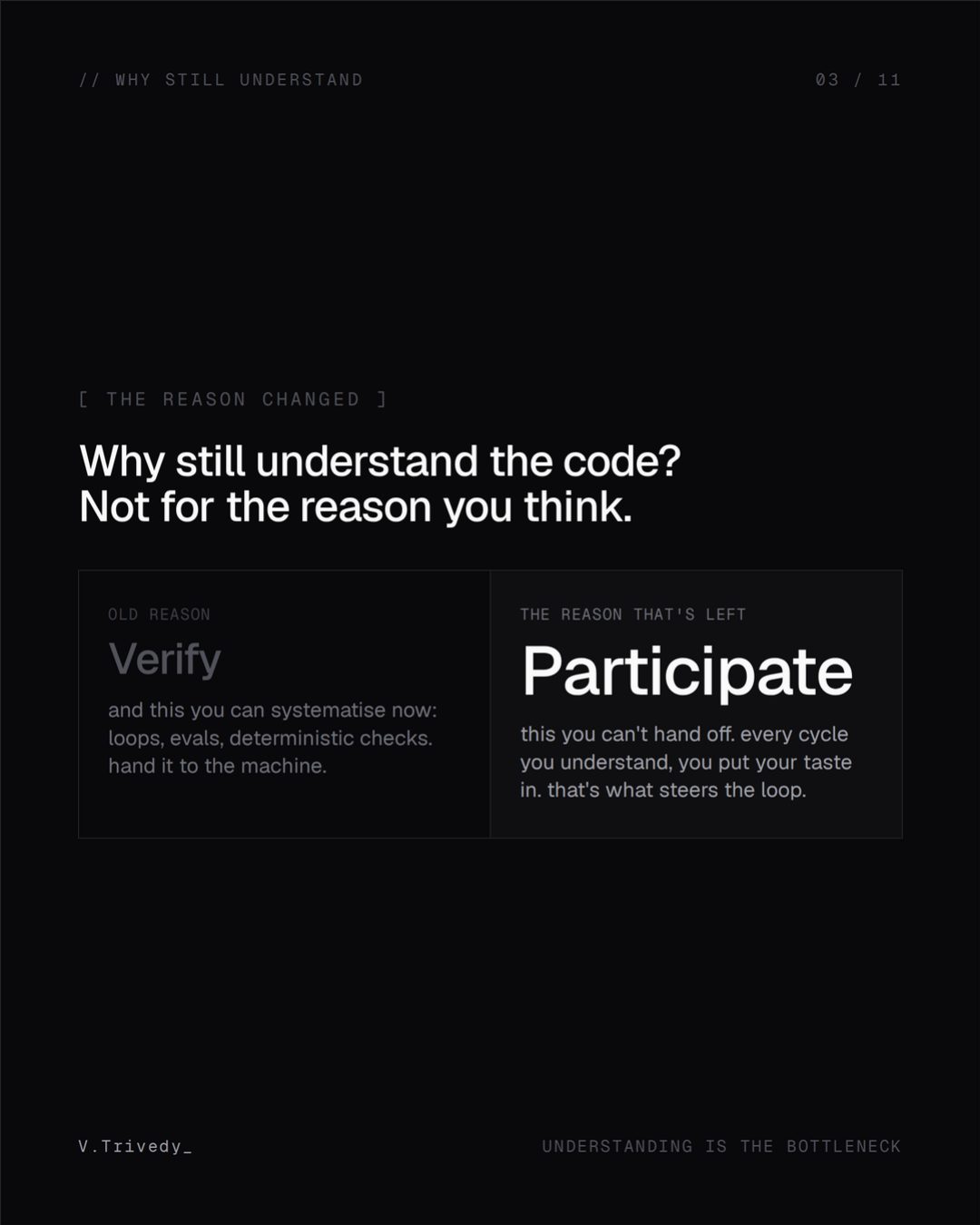
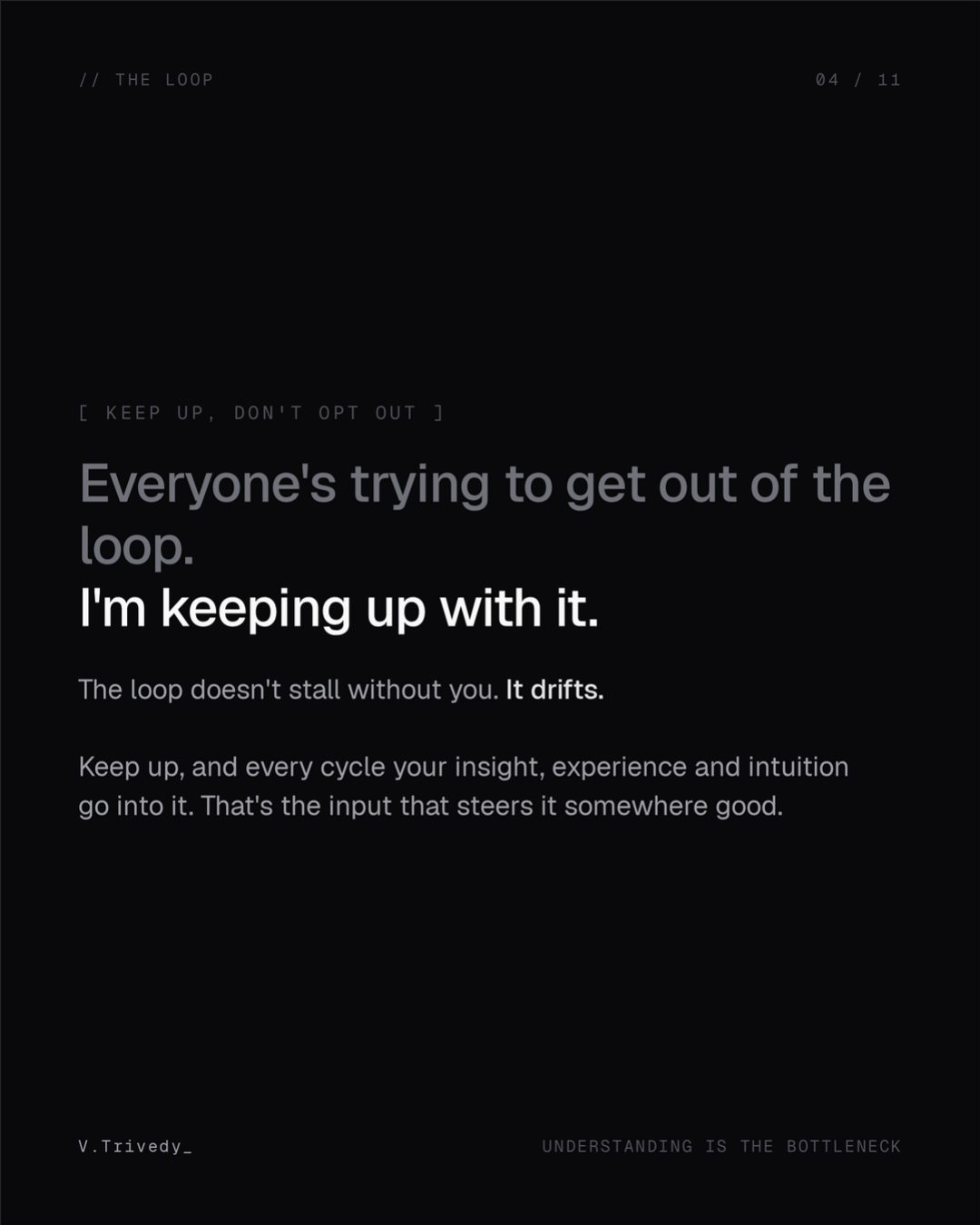
There's a debate going around about whether humans still need to understand code at all. I say yes, but my reason for it has changed. It used to be "verification", but verification you can mostly systematise now (verification loops, evals, deterministic checks etc). The reason that's left is "participation". On the cycles where you actually understand what's happening, you get to put your taste in, the intuition experience builds, and that's the input that steers the loop somewhere good.
Everyone's trying to get out of the loop. I'm making sure I can keep up with it.
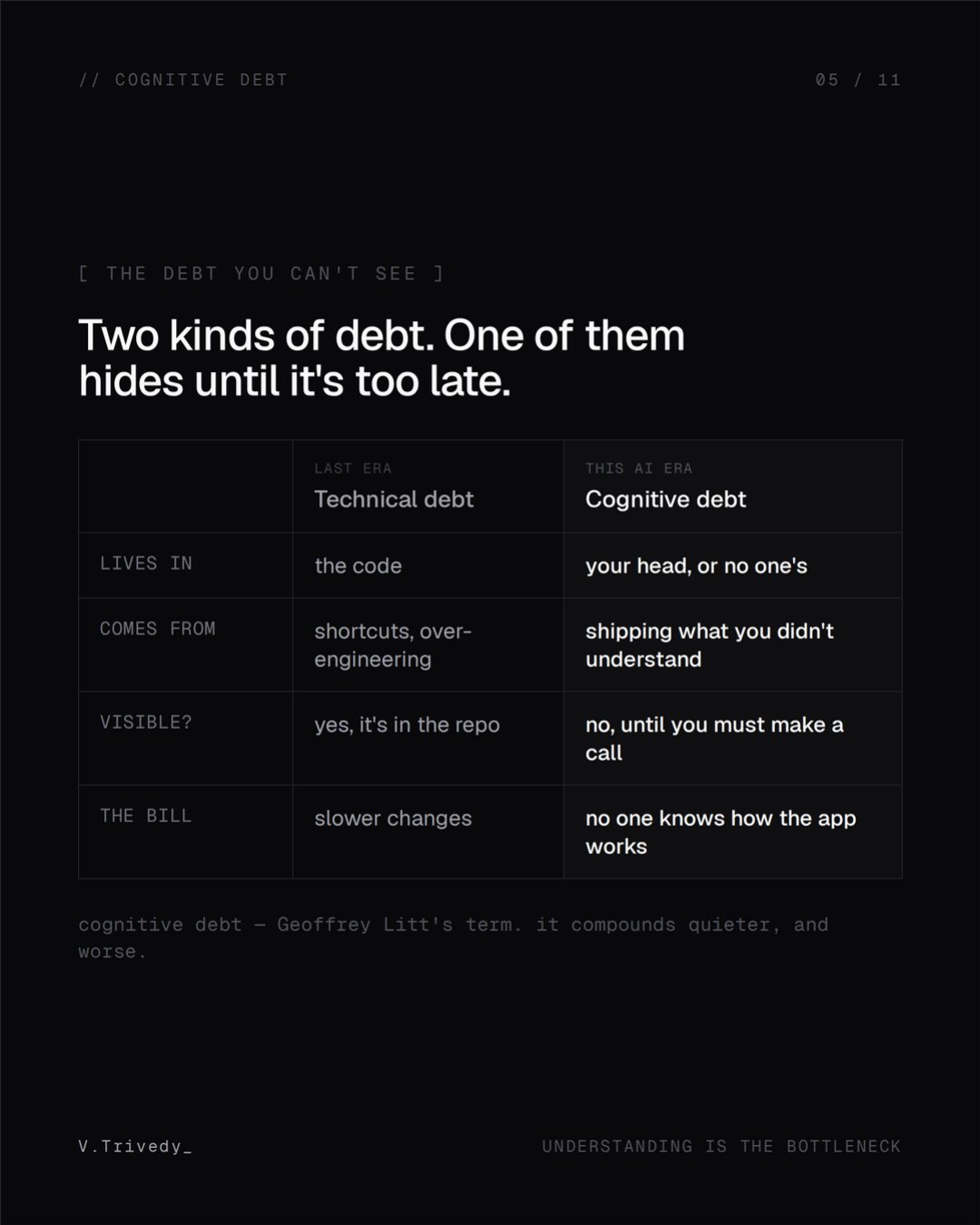
Skip that and you pay for it later, in what Geoffrey Litt calls "cognitive debt": the day nobody on your team knows what's going on inside your own app.
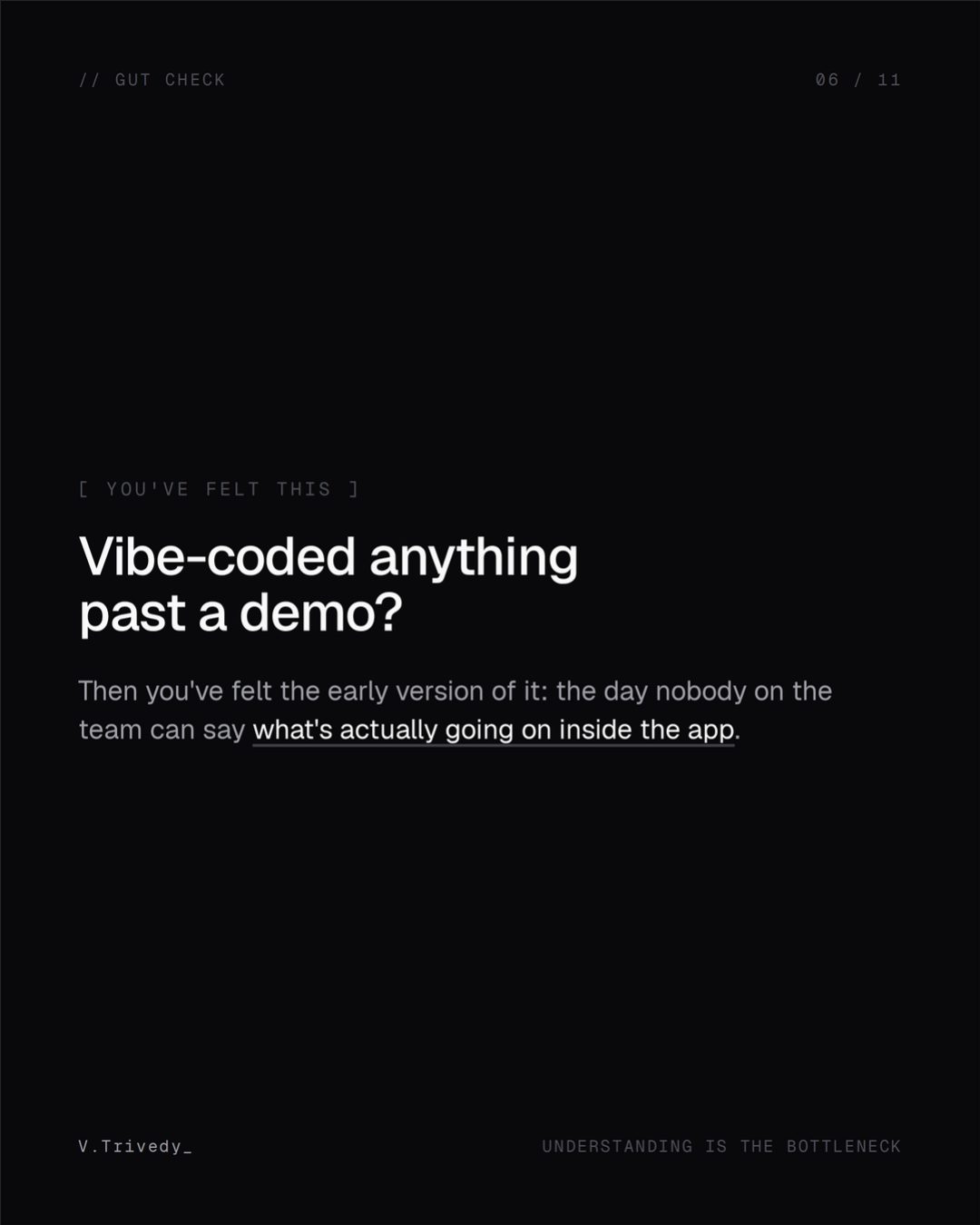
Anyone who's vibe-coded past a demo has felt an early version of this.
Old-era technical debt at least sat there in the code where you could find it. This one you don't see until you have to make a call and realise you can't.
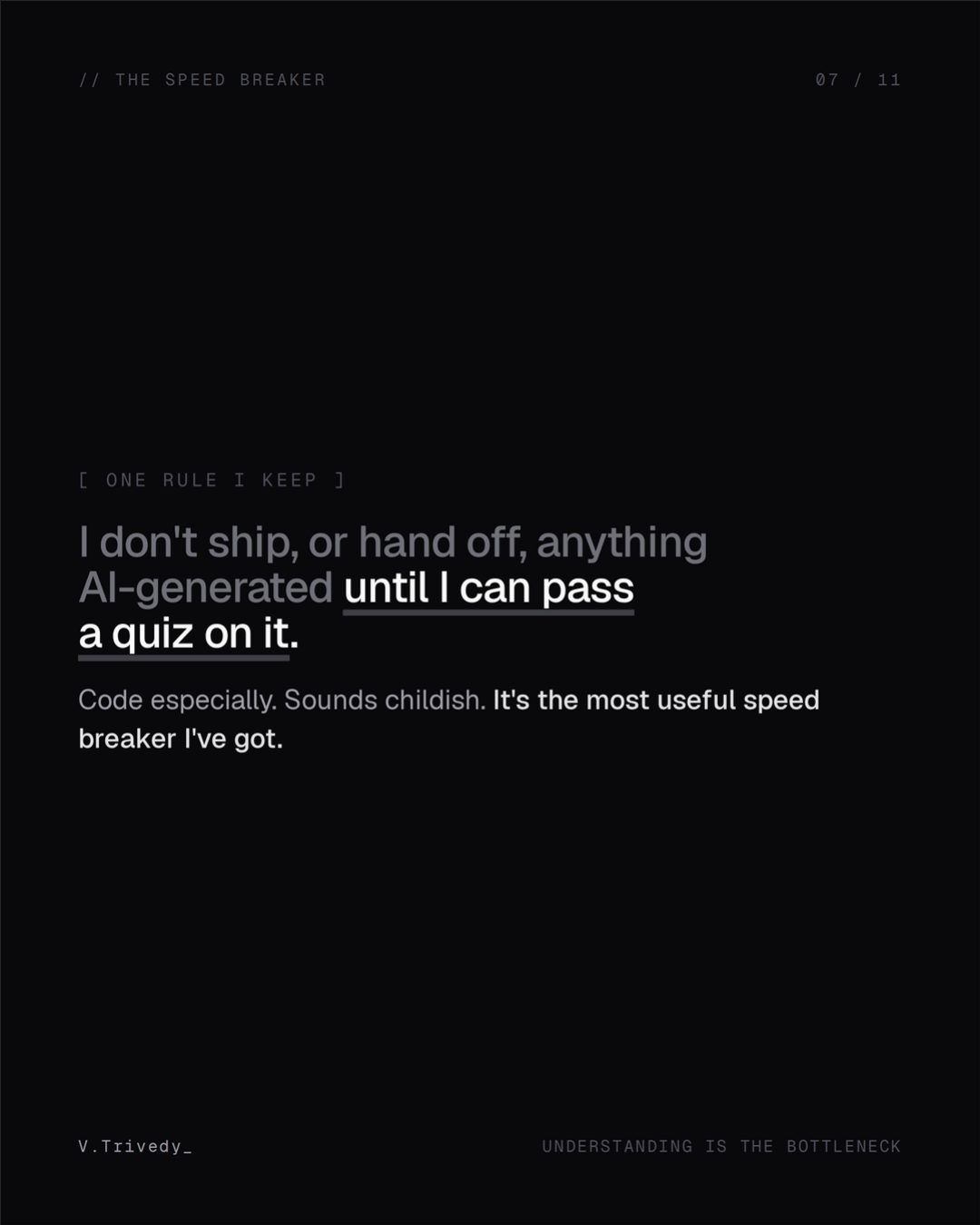
So I keep one rule: I don't ship, or hand another human, anything AI-generated (code especially) until I can pass a quiz on it. Sounds childish. It's the most useful speed breaker I've got.
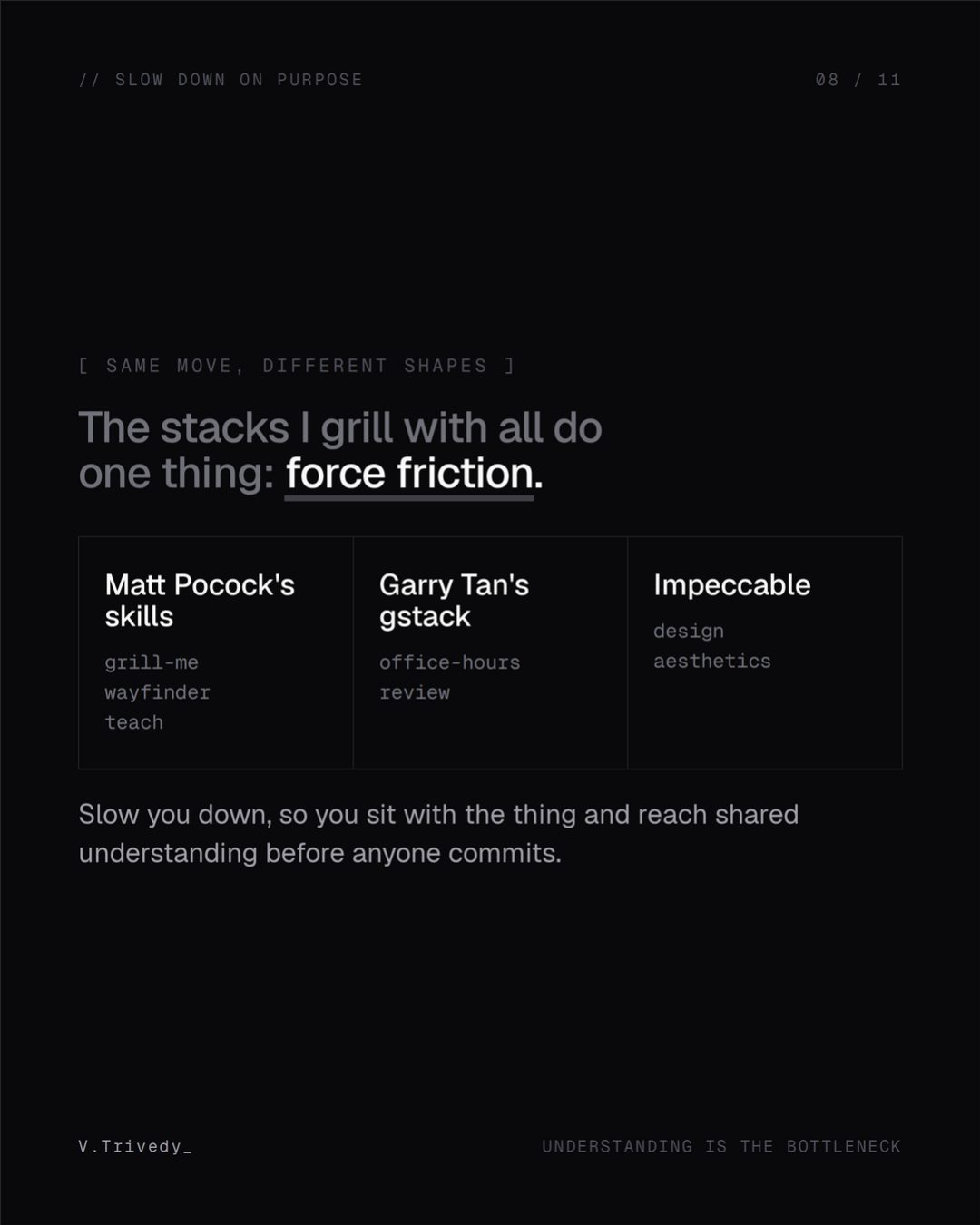
The stacks I grill with (Matt Pocock's skills, Garry Tan's gstack, Impeccable etc) are the same move in different shapes: they slow you down on purpose so you actually sit with the thing, work out what the agents are about to do and what's going on inside the loops, and have a shared understanding before anyone commits.
And understanding is easier to build now than it's ever been, because AI is the best explanation machine we've had. One of my Gen Z engineers found our architecture docs a slog (fair, reading is hard), so we built a pipeline that turns our system design into short brain-rot clips, the kind you'd thumb past on reels: why we picked that queue, why this service owns that table, decision by decision.
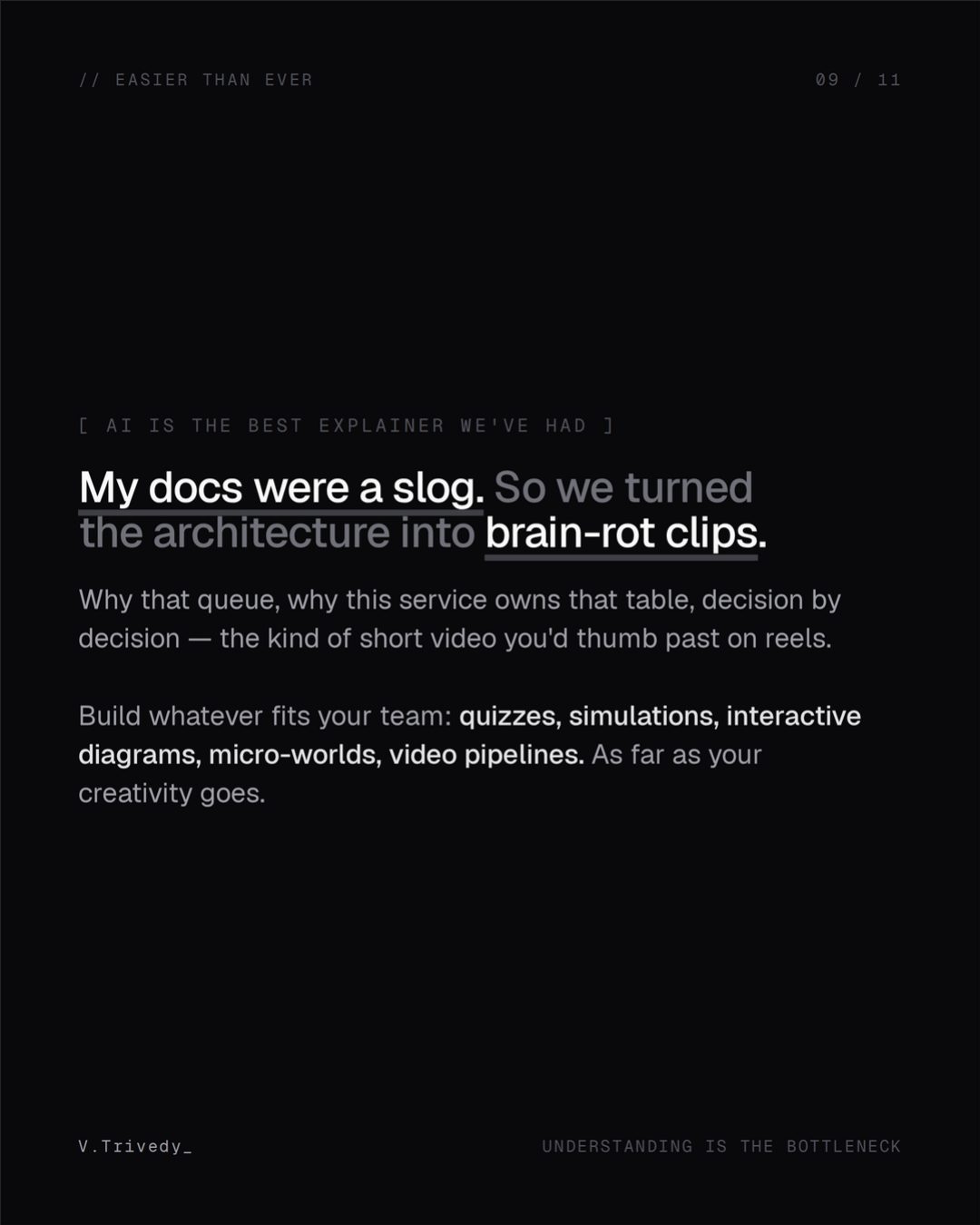
With AI you can build whatever way of understanding fits you and your team, as far as your creativity goes: quizzes, simulations, interactive diagrams, micro-worlds, video pipelines etc.
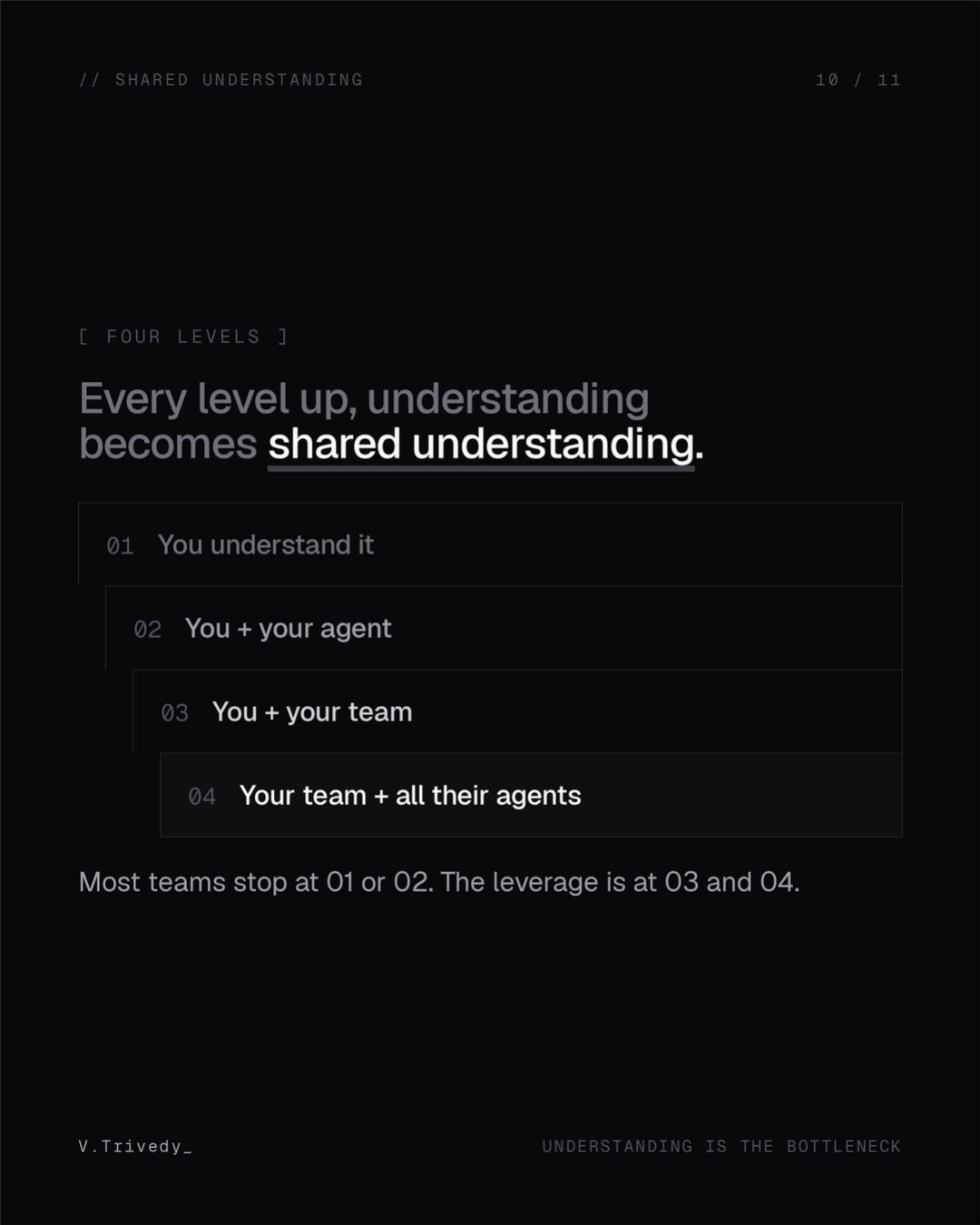
Understanding is what judgement runs on. Keep up with the loop, and steer it.